

Ex-Date vs Record Date: Key Difference Every Investor Should Know
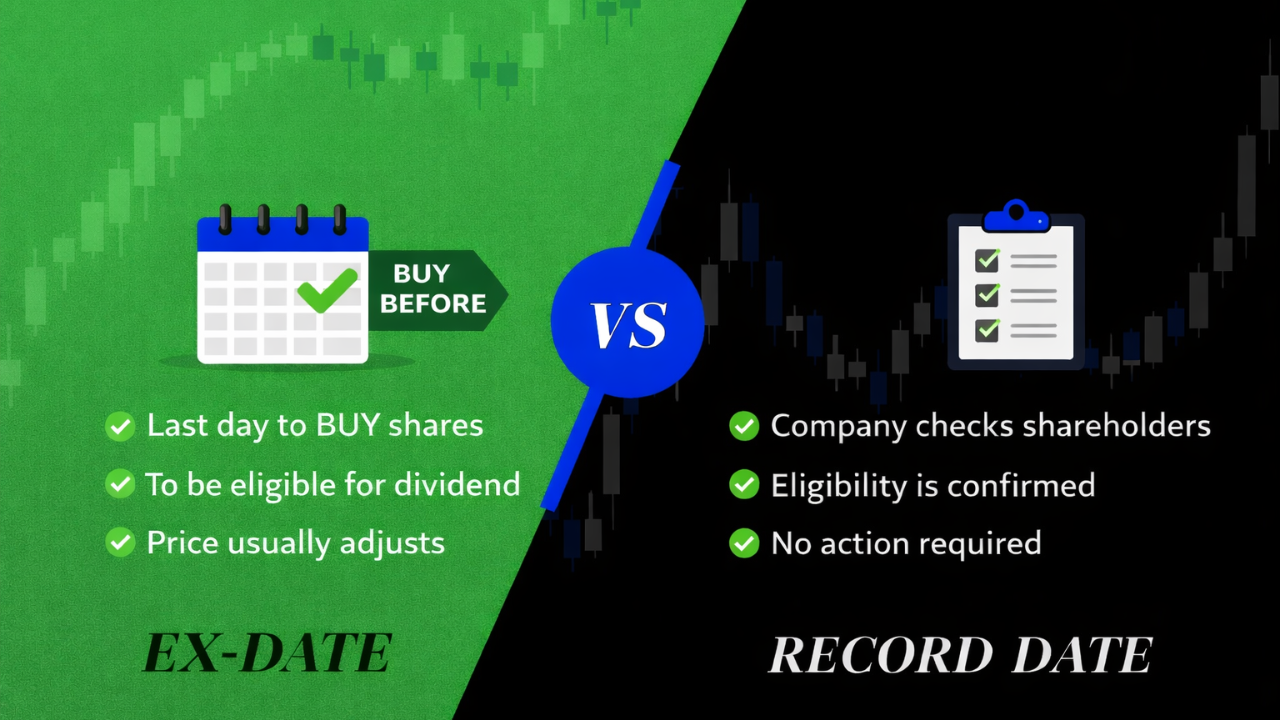
Ex-Date vs Record Date Explained If you invest in stocks for dividends or corporate actions, you must understand two important dates — ex-date and record..

by
No comments on Ex-Date vs Record Date: Key Difference Every Investor Should Know
2 minutes
Read Time
About the Author

Previous Post
Next Post
Leave a Reply
About the Author

Research
“StockBazaari”, Where Your Trading Behavior Becomes Your Strategy Most stock research firms follow an outdated, one-size-fits-all model, where every client receives the same generic buy/sell recommendations. But we believe that every trader is unique, and their research should be tailored accordingly.

Latest News





Stay Connected
Categories
Beginner Guide Blog Corporate Actions Daily Market Analysis Debt-Free Companies IPO Tracker Market Events Personal Finance Stock Market Basics Trading Psychology Trading Strategies
Tags
Bank Nifty bonus shares corporate actions Crude Oil debt free companies financial analysis Global Economy Global Markets Indian Economy Intraday Trading Investing Basics Investing Guide Investor Strategy IPO analysis IPO guide IPO investing IPO investment IPO strategy IPO tips IPO tracker Long Term Investing market analysis Market Crash Market Events Nifty 50 Nifty Analysis Nifty Levels Nifty Prediction Nifty Trading Oil Prices Options Trading Option Trading Price Action Risk Management stock investing Stock Market Stock Market Basics Stock Market Crash Stock Market India stock market news stock split Technical Analysis Trading Strategies Trading Strategy zero debt stocks
Search the Archives
Access over the years of investigative journalism and breaking reports
You May Have Missed