


Sensex Jumps 550 Points, Nifty Above 22,850
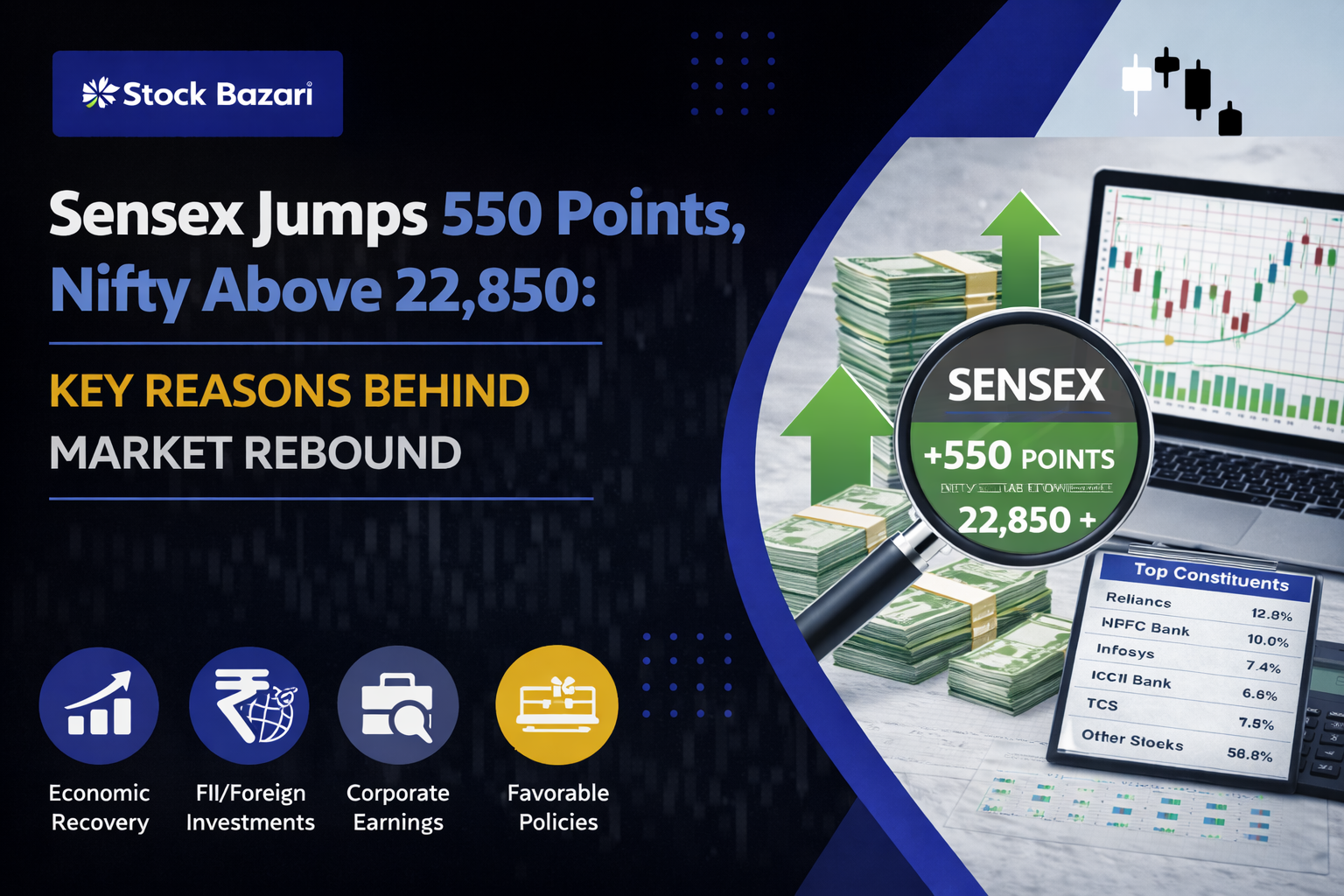
The market staged a strong comeback on Monday after a weak start, with BSE Sensex rising over 550 points and Nifty 50 reclaiming the 22,850 level. This sharp rebound came after early losses, signaling a quick shift in market sentiment.
In the first half of the session, markets were under pressure due to global uncertainty and rising crude oil prices. However, sentiment improved rapidly after reports of possible ceasefire talks between Iran and the United States. Along with this, strength in the rupee added further support to the recovery.
For investors, this kind of intraday reversal highlights how global developments can quickly influence market direction.
Market Movement Snapshot
- Sensex: Up ~550 points
- Nifty: Above 22,850
- Early session: Deep in red before recovery
The shift from negative to positive territory reflects strong buying interest at lower levels.
Key Reasons Behind the Market Rebound
1. Ceasefire Hopes Between US and Iran
The biggest trigger for the rebound was news of a possible ceasefire plan between the US and Iran. Reports suggest that both sides are reviewing a proposal aimed at ending hostilities.
A key part of this plan includes reopening the Strait of Hormuz, a critical oil supply route. This eased fears of supply disruption and helped improve global sentiment.
Markets react quickly to geopolitical developments, especially when they impact energy prices and global stability.
2. Recovery in the Rupee
The rupee strengthened against the US dollar, gaining around 33 paise. This provided additional support to the market.
The appreciation came after regulatory measures aimed at controlling speculative positions in the currency market. A stronger currency often boosts investor confidence and reduces import-related pressures.
3. Short Covering and Buying at Lower Levels
After the early fall, many traders took advantage of lower prices to enter the market. This led to:
- Short covering
- Fresh buying in key sectors
- Quick recovery in benchmark indices
Such moves are common during volatile sessions.
What This Means for Investors
This rebound offers a few important lessons:
- Markets are highly sensitive to global news
- Sharp falls can quickly reverse
- Timing the market is difficult
Instead of reacting emotionally, investors should focus on long-term strategies and fundamentals.
Risks Still Remain
Despite the recovery, some concerns continue:
- Geopolitical tensions are not fully resolved
- Crude oil prices remain volatile
- Foreign fund outflows may continue
This means markets could remain unpredictable in the short term.
Practical Strategy for Investors
Here’s what investors can consider:
- Avoid chasing sudden rallies
- Invest gradually during volatility
- Keep an eye on global cues
- Diversify across sectors
A disciplined approach works better than reacting to daily news.