


How to Start Trading in India: Beginner Guide
Trading in the stock market has become very popular in India. With mobile trading apps and online brokers, anyone can start trading from their phone or computer.
However, many beginners jump into trading without understanding how it works. Learning the basics and following the right steps can help you avoid common mistakes and trade more confidently.
This guide explains how to start trading in India step by step.
What is Trading in the Stock Market?
Trading means buying and selling stocks within a short period to earn profit from price changes.
Unlike long-term investing, trading focuses on short-term opportunities in the market.
For example:
You buy a stock at ₹500 and sell it at ₹550 the same day.
Your profit = ₹50 per share.
Traders use market trends, charts, and news to make decisions.
Step-by-Step Guide to Start Trading
Starting trading in India is simple if you follow the correct process.
Step 1: Learn the Basics of the Stock Market
Before placing your first trade, it is important to understand how the stock market works.
Learn about:
- Stock exchanges
- Market orders and limit orders
- Risk management
- Basic technical analysis
This knowledge helps beginners avoid costly mistakes.
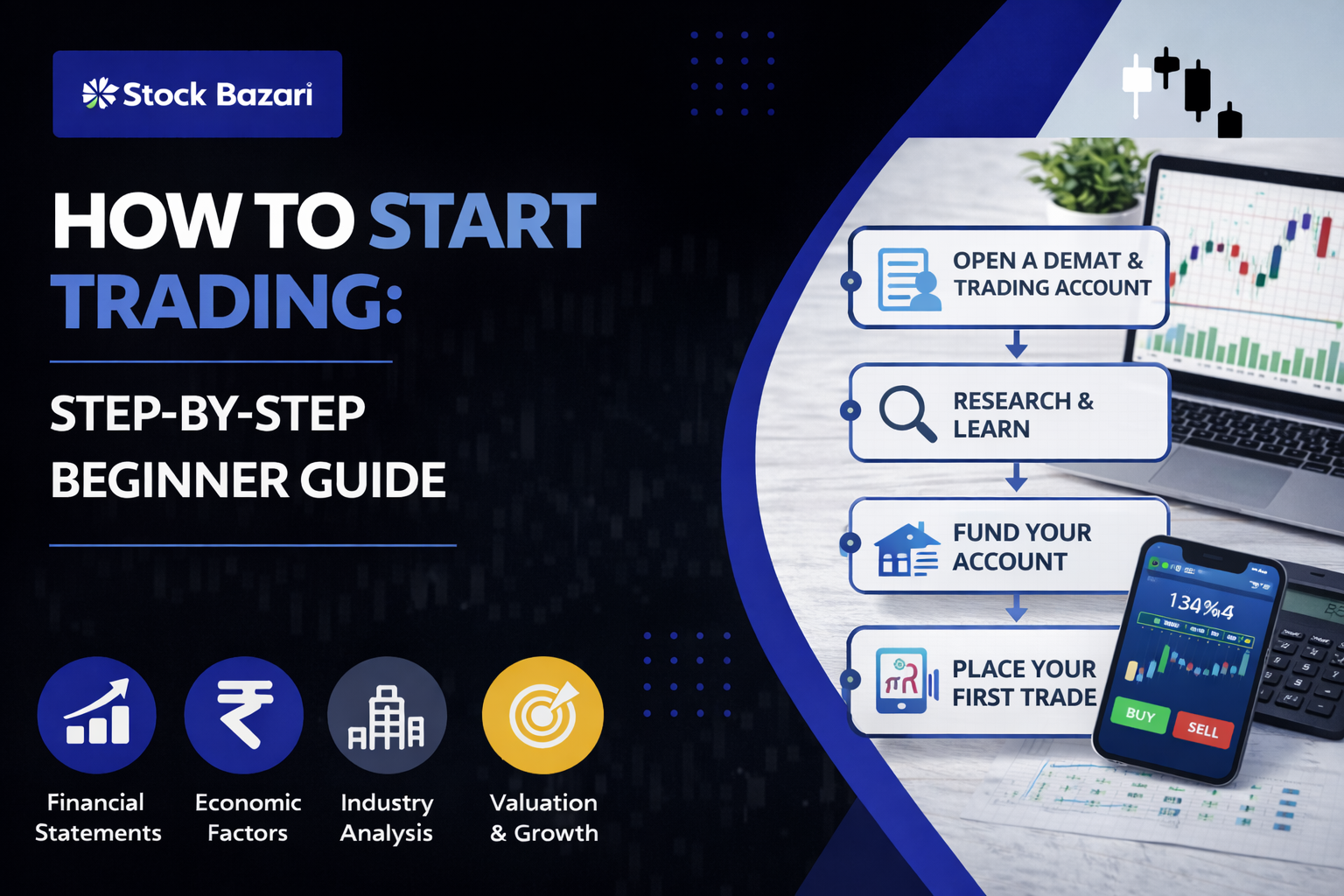
Step 2: Open a Demat and Trading Account
To trade in India, you need two accounts:
Demat Account: Stores your shares in digital form.
Trading Account: Allows you to buy and sell shares in the market.
These accounts can be opened online through registered brokers.
Step 3: Choose a Reliable Broker
A broker acts as the middleman between you and the stock exchange.
When choosing a broker, consider:
- Brokerage charges
- Trading platform quality
- Customer support
- Research tools
Many brokers in India offer easy mobile apps for beginners.
Once your trading account is active, you can transfer money from your bank account.
Start with a small amount of money while learning trading strategies.
This reduces risk and helps you gain practical experience.
Step 5: Start With Small Trades
Beginners should avoid large trades in the beginning.
Instead:
- Trade small quantities
- Focus on learning market behavior
- Avoid emotional decisions
Gradually increase your investment as you gain experience.
Types of Trading in India
There are different trading styles in the stock market.
Intraday Trading
Buying and selling stocks within the same day.
Swing Trading
Holding stocks for a few days or weeks.
Positional Trading
Holding trades for longer periods based on trends.
Beginners usually start with small intraday or swing trades
Common Mistakes Beginners Should Avoid
Many new traders lose money because of common mistakes.
Avoid these errors:
- Trading without research
- Following random tips
- Investing all money in one trade
- Overtrading
- Ignoring stop-loss
Controlling risk is one of the most important skills in trading.
Tips for Successful Trading
If you want to improve your trading performance, follow these tips:
- Start with a clear trading plan
- Always use stop-loss to control risk
- Focus on learning technical analysis
- Avoid emotional decisions
- Keep improving your knowledge
Successful traders focus on discipline and patience rather than quick profits.
Conclusion
Trading in the stock market can be an exciting opportunity for beginners in India. With proper knowledge, risk management, and consistent practice, trading can become a useful financial skill.
Start small, learn continuously, and focus on improving your strategy over time.