


Intraday Trading Meaning: Beginner Guide
Intraday trading has become very popular among stock market beginners in India. Many traders try to earn profit from short-term price movements in stocks during the same day.
But before starting, it is important to understand the intraday trading meaning and how it actually works.
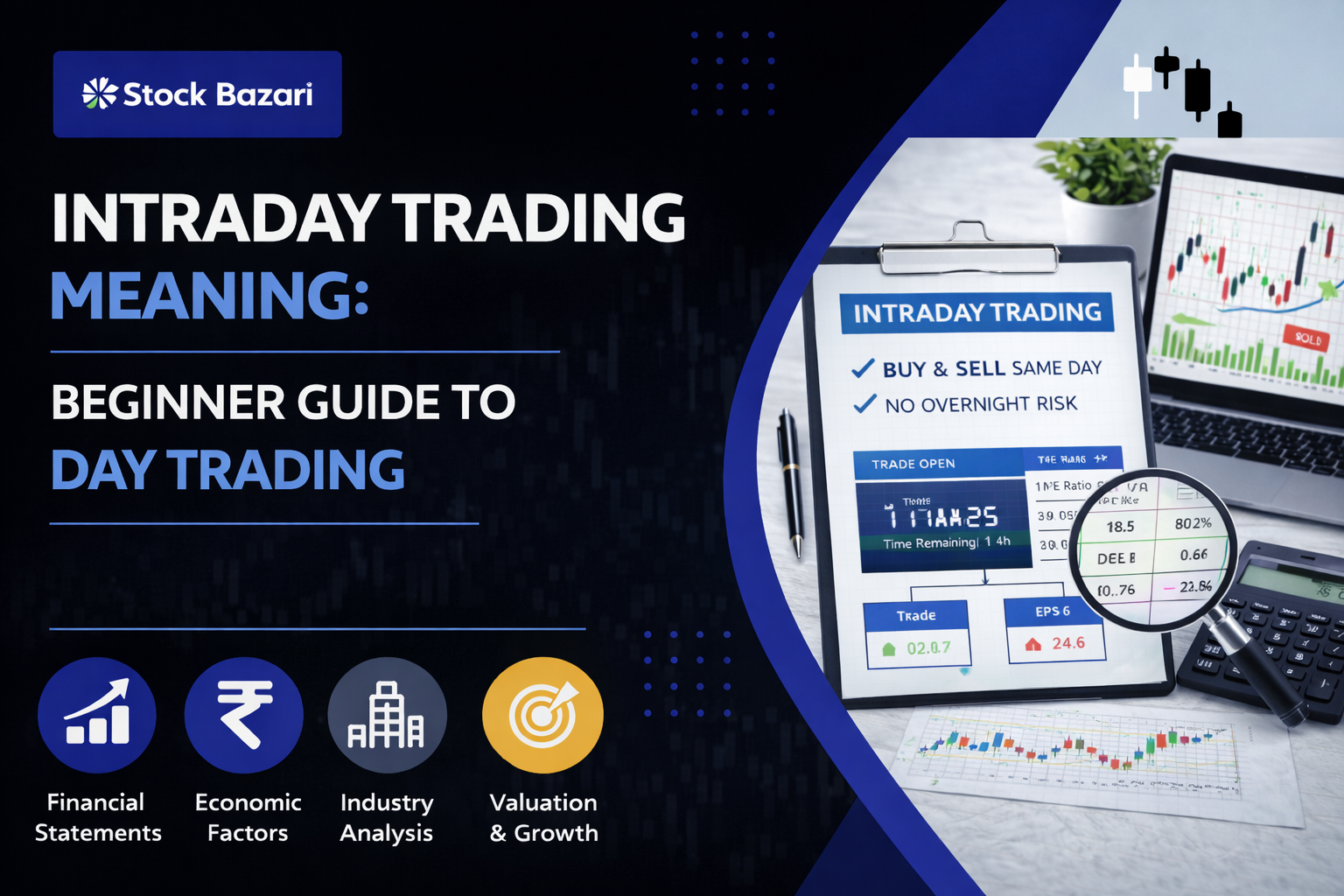
In simple words, intraday trading means buying and selling a stock on the same day before the market closes.
If the trader does not close the position, the broker usually closes it automatically at the end of the trading session.
Intraday trading focuses on short-term opportunities instead of long-term investment.
What is Intraday Trading?
Intraday trading is also known as day trading.
In this type of trading, traders buy shares during market hours and sell them before the market closes on the same day.
The goal is to make profit from small price changes in the stock.
For example:
A trader buys a stock at ₹200 in the morning.
Later the price rises to ₹210.
The trader sells the stock and earns ₹10 profit per share.
This entire transaction happens within one trading day.
How Intraday Trading Works in India
Intraday trading works through stock exchanges and online trading platforms.
Buying and Selling on the Same Day
In intraday trading, traders must buy and sell shares within the same trading session.
In India, stock market hours are usually:
9:15 AM to 3:30 PM
All intraday positions must be closed before the market closes.
Trading Through Online Brokers
To do intraday trading, traders need:
- A Demat account
- A Trading account
- Access to a trading platform or mobile app
Many brokers provide tools like charts, indicators, and order types to help traders make decisions.
Example of Intraday Trading
Let’s understand intraday trading with a simple example.
Suppose a trader buys 100 shares of a company at ₹150.
Total investment = ₹15,000
Later in the day, the price rises to ₹155.
The trader sells the shares.
Profit = ₹5 × 100 = ₹500
However, if the price falls instead of rising, the trader may face a loss.
This is why risk management is important.
Benefits of Intraday Trading
Intraday trading attracts many traders because of several advantages.
Some benefits include:
- Opportunity to earn quick profits
- No overnight market risk
- Lower capital requirement due to margin trading
- Many trading opportunities during the day
However, these benefits also come with higher risk.
Risks of Intraday Trading
Intraday trading can be risky, especially for beginners.
- Common risks include:
- High market volatility
- Emotional decision-making
- Overtrading
- Lack of proper strategy
Without proper knowledge and discipline, traders may lose money quickly.
Because of this, beginners should learn market analysis and risk management.
Intraday Trading Tips for Beginners
If you want to start intraday trading, follow these simple tips.
- Start with small capital
- Focus on liquid stocks
- Always use stop-loss
- Avoid trading based on rumors
- Practice technical analysis
Successful traders focus more on risk control than quick profit.
Consistency and discipline are key to long-term success.
Conclusion
Intraday trading is a popular way to trade stocks in the Indian market. It involves buying and selling shares within the same day to benefit from short-term price movements.
While it can provide opportunities for profit, it also involves significant risk. Beginners should focus on learning market fundamentals, practicing strategies, and managing risk carefully.
With proper knowledge and patience, intraday trading can become a useful skill in the stock market.