




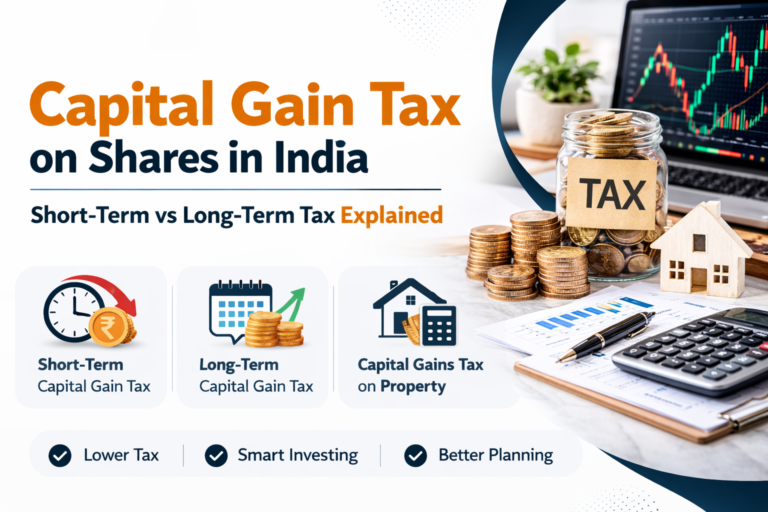
Understanding capital gain tax on shares in India is important for investors who trade in the stock market or invest for long-term growth. Capital gains tax is applied when an investor sells shares or property and earns a profit from the transaction. The tax amount depends on the holding period of the asset and the type of investment.
Investors trading on exchanges such as the National Stock Exchange of India must follow the taxation rules set by the government. These rules determine how profits from stocks and other assets are taxed.
In India, capital gains are generally classified as short-term or long-term. This classification helps determine the tax rate applied to the profit earned from selling shares.
Types of Capital Gains in India
Capital gains are divided into two main categories depending on how long the investment is held before selling.
Short Term Capital Gain Tax on Shares in India
Short term capital gain tax on shares in India applies when shares listed on a stock exchange are sold within one year of purchase. Profits from such transactions are currently taxed at a fixed rate under the Income Tax Act.
This means investors who frequently trade stocks may need to pay short-term capital gains tax on the profits earned from their transactions.
Long Term Capital Gain Tax
Long-term capital gains occur when shares are held for more than one year before selling. These gains are usually taxed differently and often have a specific exemption limit before the tax rate is applied.
Long-term investing is often preferred because the tax burden may be lower compared to short-term trading.
Capital Gains Tax India on Property
Apart from stocks, capital gains tax India on property also applies when real estate is sold at a profit. Property gains are categorized as short-term if the property is held for a shorter period and long-term if it is held for several years before selling.
Tax rules for property may also include deductions and exemptions if the gains are reinvested in another property under certain conditions.
How Investors Can Plan for Capital Gains Tax
Investors should always consider tax implications before selling shares or property. Holding investments for longer periods, maintaining proper records, and understanding tax exemptions can help reduce the overall tax burden.
FAQs About Capital Gain Tax in India
What is capital gain tax on shares in India?
Capital gain tax on shares in India is the tax applied to profits earned when investors sell shares at a higher price than the purchase price.
What is short term capital gain tax on shares in India?
Short term capital gain tax on shares in India applies when shares are sold within one year of purchase.
What is capital gains tax India on property?
Capital gains tax India on property is the tax charged on profit earned from selling real estate.
How can investors reduce capital gains tax?
Investors can reduce tax by holding assets longer, using exemptions, and planning investments carefully.