



Introduction
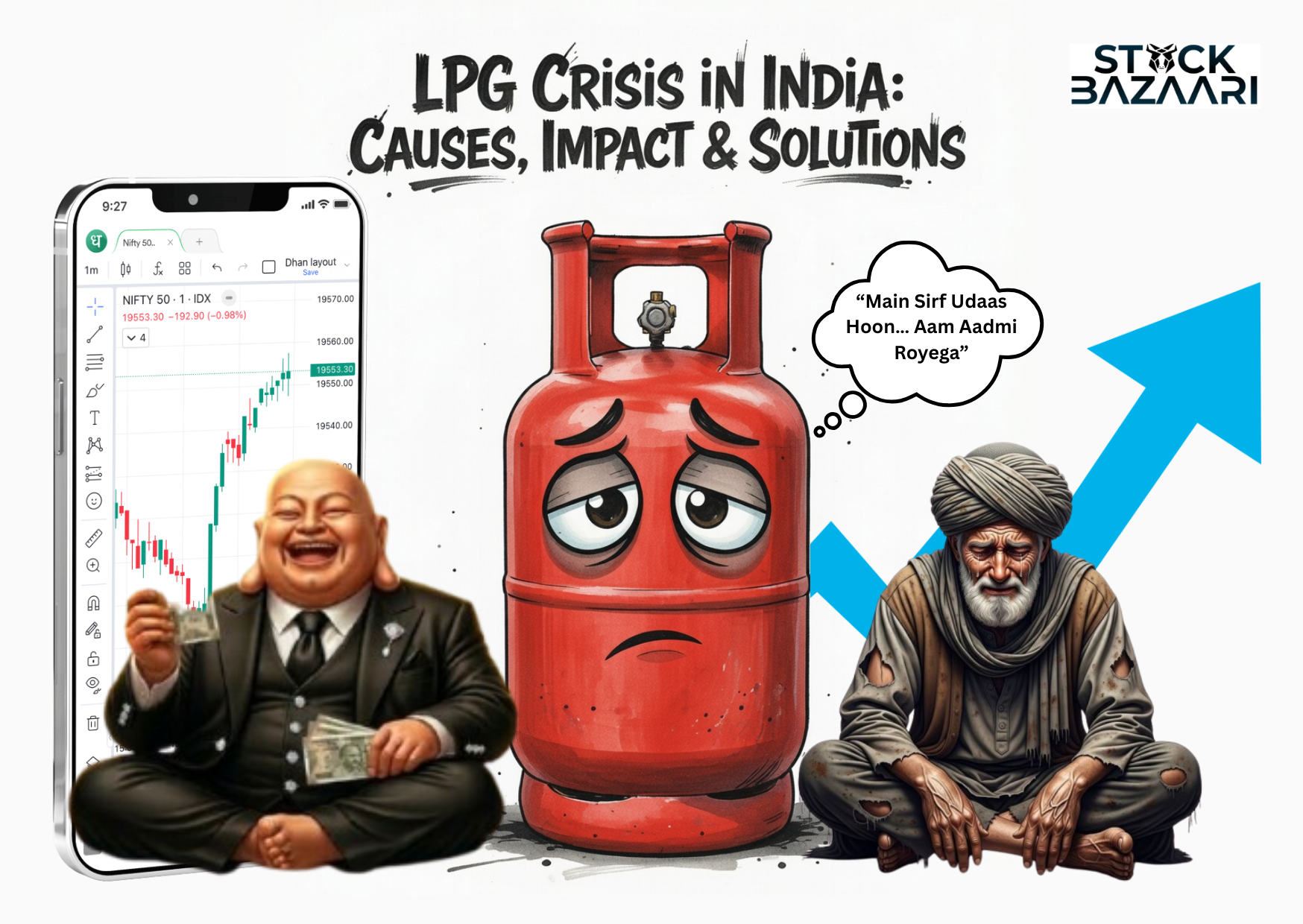
The LPG crisis in India is affecting many families. LPG (Liquefied Petroleum Gas) is the main cooking fuel for millions of homes in India. When LPG prices go up, people have to spend more money every month.
At the same time, the LPG crisis in India also affects the stock market. Some big energy companies may still make good profits. Companies such as Indian Oil Corporation, Bharat Petroleum, Hindustan Petroleum, and Oil and Natural Gas Corporation are linked to LPG and oil prices.
Because of this, large investors in the stock market can sometimes earn substantial profits, even when the general public is struggling with higher fuel prices.
What is the LPG Crisis in India
The LPG crisis in India means that LPG cylinders are becoming more expensive and sometimes supply becomes difficult.
India imports a large amount of LPG from other countries. Because of this, LPG prices in India change when global oil prices change.
Factor |
|
|
|
|
|
|
|
|
|
|
|
|
|
|
|
|
| Impact |
Import dependency | About 60% | |||||||||||||||||
Global oil prices | Increase LPG price | |||||||||||||||||
Currency changes | Make imports more costly |
Causes of the LPG Crisis in India
1. Rising Global Oil Prices
When crude oil prices increase around the world, LPG prices also increase.
2. High Import Dependency
India imports about 55–60% of its LPG from other countries.
3. Global Conflicts
Events like the Russia-Ukraine War disturbed the global energy supply.
4. Higher Demand in India
Government programs like Pradhan Mantri Ujjwala Yojana helped many families get LPG connections. This increased demand for LPG.
Impact of the LPG Crisis in India on the Stock Market
The LPG crisis in India also affects the stock market.
1. Big Investors Can Make Profits
When oil and gas prices rise, some companies may earn more money. If company profits increase, their stock prices can also rise.
Big investors who own many shares can earn large profits.
2. Energy Company Stocks May Move Up
Companies like Oil and Natural Gas Corporation may benefit when oil prices are high.
3. Middle-Class Families Face Higher Costs
While investors may gain, middle-class families must pay more for LPG cylinders and daily expenses.
This shows that sometimes stock market profits and real-life struggles happen at the same time.
Solutions to the LPG Crisis in India
Increase Domestic Production
India can produce more gas and oil inside the country.
Use Alternative Energy
Using biogas, electric cooking, and renewable energy can reduce LPG demand.
Build LPG Reserves
Storing LPG can help India manage supply problems in the future.
Examples
Example 1:
If global oil prices increase by 10–15%, LPG prices may also increase. Big investors who own energy stocks may earn higher profits.
Example 2:
If LPG subsidies change, companies like Hindustan Petroleum may see changes in profits, which can affect their stock prices.
FAQs
How does the LPG crisis in India affect the stock market?
It can change the profits of oil and gas companies and affect their stock prices.
Which stocks are affected by the LPG crisis in India?
Companies like Indian Oil Corporation, Bharat Petroleum, and Oil and Natural Gas Corporation.
Can investors benefit from the LPG crisis in India?
Yes. Some investors may profit from energy-sector stocks when oil prices rise.