


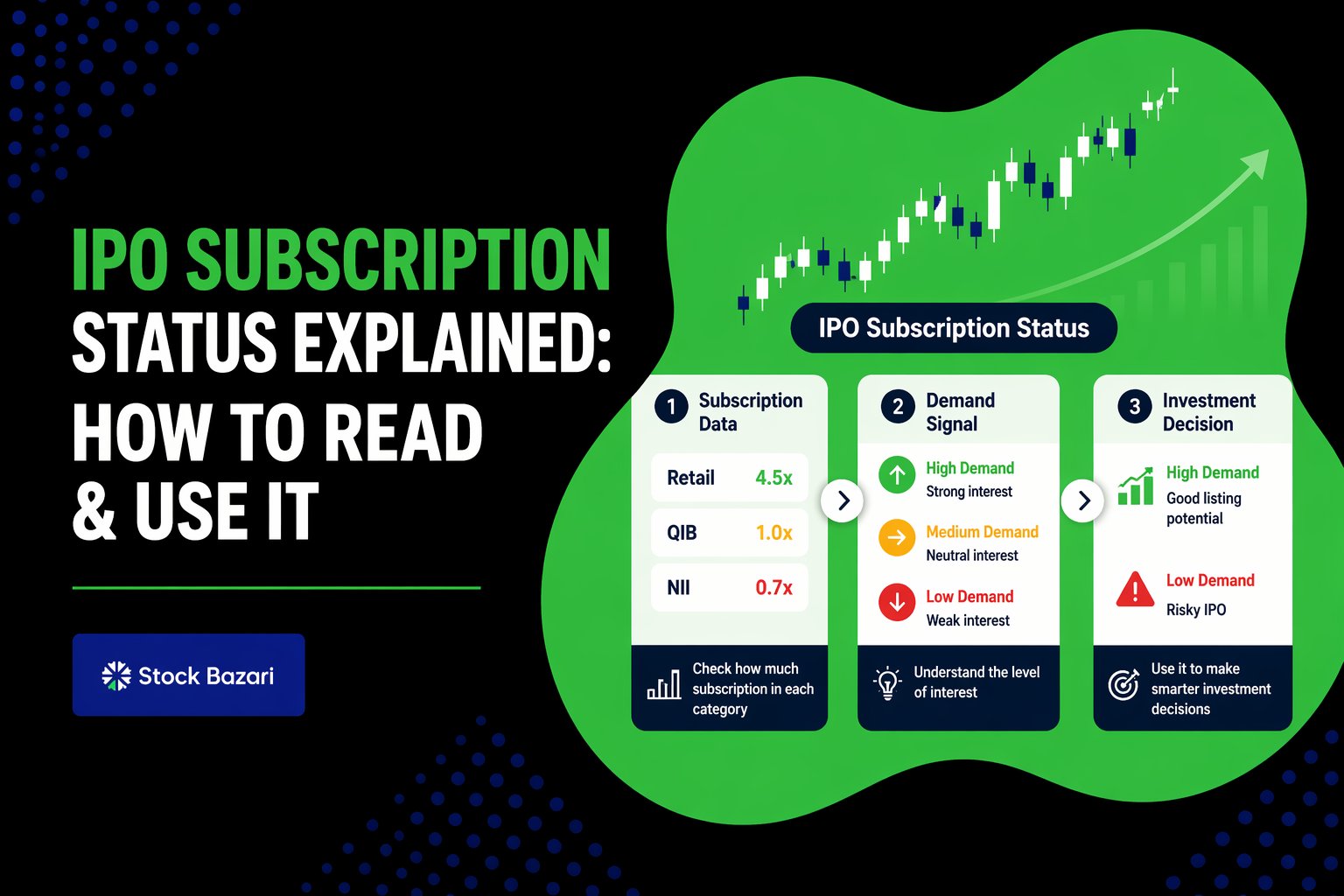
IPO Subscription Status Explained
When you apply for an IPO, one of the most important things to track is the subscription status. It tells you how much demand the IPO is getting from investors.
But many beginners don’t fully understand what these numbers mean. Let’s simplify it.
What is IPO Subscription Status?
IPO subscription status shows how many times an IPO has been subscribed compared to the total shares offered.
For example:
- If an IPO is subscribed 5 times, it means demand is 5x higher than available shares.
It is updated daily during the IPO bidding period.
How IPO Subscription Status Works
IPO subscription status shows how many times an IPO has been subscribed compared to the total shares offered.
For example:
- If an IPO is subscribed 5 times, it means demand is 5x higher than available shares.
It is updated daily during the IPO bidding period.
Categories in Subscription Data
Subscription data is divided into categories:
- Retail Investors (RII)
- Non-Institutional Investors (NII/HNI)
- Qualified Institutional Buyers (QIB)
Each category has separate demand levels.
For example:
- Retail: 3x
- NII: 10x
- QIB: 15x
This shows strong interest from institutions.
How to Read Subscription Numbers
Understanding subscription data is simple if you follow these points:
- Below 1x → Weak demand
- 1x to 3x → Moderate demand
- 3x to 10x → Good demand
- 10x+ → Very high demand
Also, focus on trends:
- Increasing daily subscription → Positive sign
- Sudden spikes → May indicate last-day rush
Don’t just look at total numbers — check category-wise demand.
Why Subscription Status Matters
Subscription status helps you make better investment decisions.
Here’s why it is important:
- Indicates demand for the IPO
- Helps estimate listing gains
- Shows investor confidence
- Supports decision-making along with GMP
For example, an IPO with strong subscription and positive GMP has a higher chance of listing gains.
Tips to Use Subscription Data Smartly
Here are some practical tips:
- Track subscription daily, not just on the last day
- Focus on QIB and NII participation
- Combine subscription data with GMP
- Avoid applying blindly based on high numbers
- Compare with similar past IPOs
A balanced approach gives better results than relying on one factor.