


Margin Trading in Stock Market
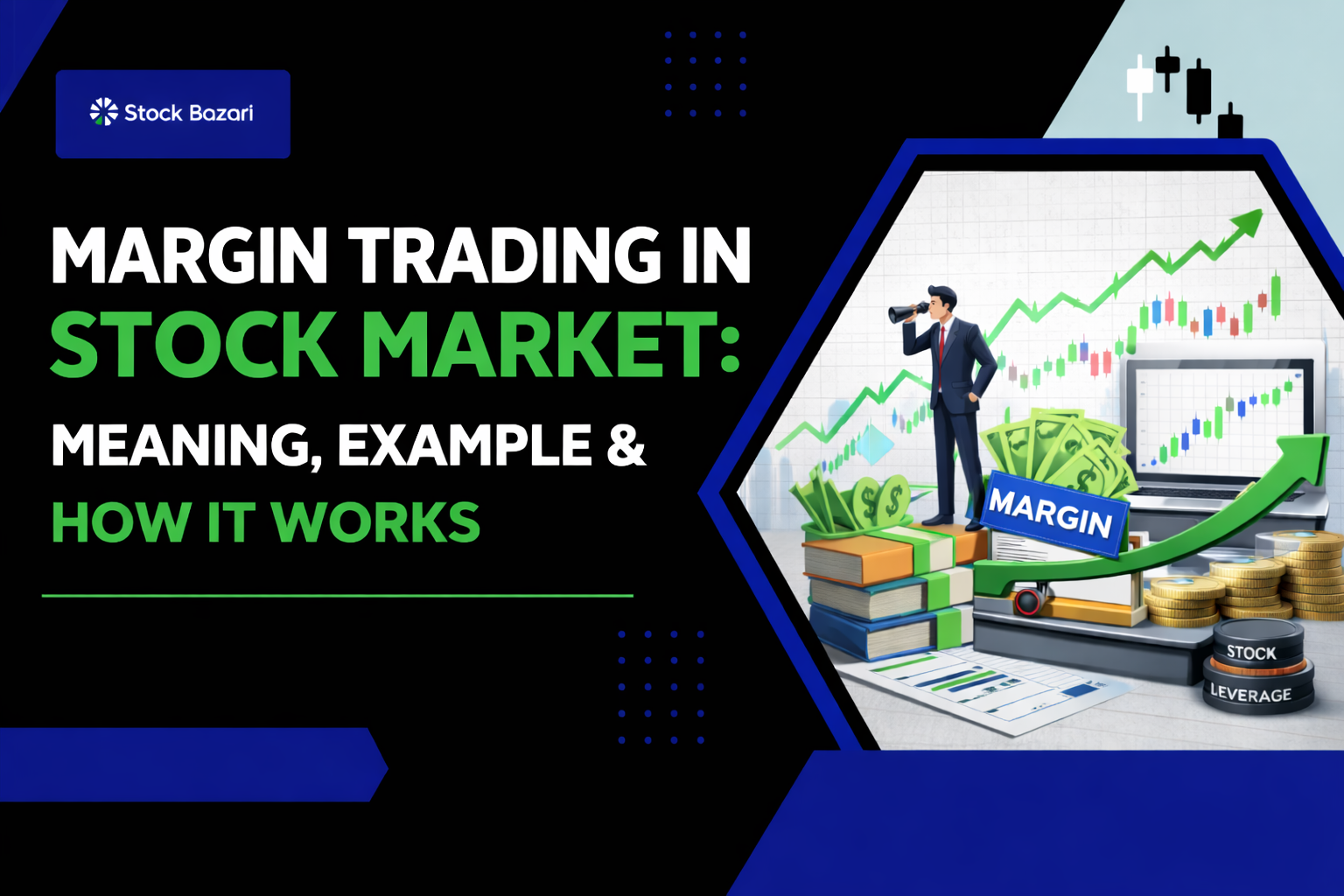
Margin trading is a popular method used by traders who want to increase their buying power in the stock market. It allows traders to buy more shares than their actual capital by borrowing money from their broker.
In the Indian stock market, margin trading is widely used in intraday trading and derivatives trading. While margin trading can help increase profits, it also increases the risk of losses.
For beginners, it is important to understand how margin trading works before using it in real trades
What is Margin Trading?
Margin trading means borrowing money from a broker to buy shares or take larger positions in the market.
Instead of paying the full amount of the trade, traders only need to deposit a part of the total value called the margin.
The broker funds the remaining amount required for the trade.
This system allows traders to control a larger position with smaller capital.
Margin trading is commonly used in:
- Intraday trading
- Futures trading
- Options trading
- Short-term trading strategies
How Margin Trading Works
In margin trading, traders must maintain a minimum amount of money in their trading account. This amount is called the initial margin.
For example:
- Trader capital: ₹20,000
- Broker margin facility: 5x
This means the trader can take a position worth:
- ₹20,000 × 5 = ₹100,000
The broker provides the additional funds required to complete the trade.
However, if the trade moves in the opposite direction, losses will also increase.
Example of Margin Trading in India
Let’s understand margin trading with a simple example.
Suppose a stock is trading at ₹500 per share.
Without margin trading, a trader with ₹10,000 can buy:
₹10,000 ÷ ₹500 = 20 shares
But if the broker provides 5x margin, the trader can buy shares worth:
₹10,000 × 5 = ₹50,000
This means the trader can buy:
₹50,000 ÷ ₹500 = 100 shares
If the stock price increases, the trader earns profit on the larger position.
However, if the price falls, losses will also increase.
Benefits of Margin Trading
Margin trading can offer several advantages when used carefully.
Increased Buying Power
Margin trading allows traders to take larger positions with smaller capital.
This helps traders participate in more opportunities in the market.
More Trading Opportunities
With margin trading, traders can enter multiple trades and take advantage of short-term market movements.
This is especially useful for active traders.
Risks of Margin Trading
While margin trading can increase profits, it also involves significant risks
Higher Losses
Since traders control larger positions, losses can increase quickly if the market moves against them.
This is one of the biggest risks of margin trading.
Margin Call Risk
If losses exceed a certain limit, the broker may issue a margin call.
This means the trader must deposit additional funds to maintain the position. If the trader fails to do so, the broker may automatically close the trade.
Because of this risk, traders must always manage their capital carefully.
Tips for Beginners Using Margin Trading
If you are new to margin trading, follow these simple tips.
- Start with small positions
- Use stop-loss orders
- Avoid excessive leverage
- Understand broker margin rules
- Focus on risk management
Learning proper trading discipline is important when using margin trading.
Conclusion
Margin trading is a powerful tool that allows traders to increase their buying power in the stock market. By borrowing funds from brokers, traders can take larger positions and potentially increase profits.
However, margin trading also increases risk. Beginners should use margin carefully and always focus on managing losses.
Understanding how margin trading works can help traders make better decisions and avoid unnecessary risks in the stock market.