


Futures vs Options: Understanding the Difference
In the Indian stock market, many traders use derivative trading to take advantage of market movements. Two of the most common derivatives are futures and options.
Beginners often hear the term F&O trading, which stands for Futures and Options. However, many people do not clearly understand the difference between the two.
This guide explains futures vs options in simple terms so beginners can understand how these trading instruments work.
What Are Futures Contracts?
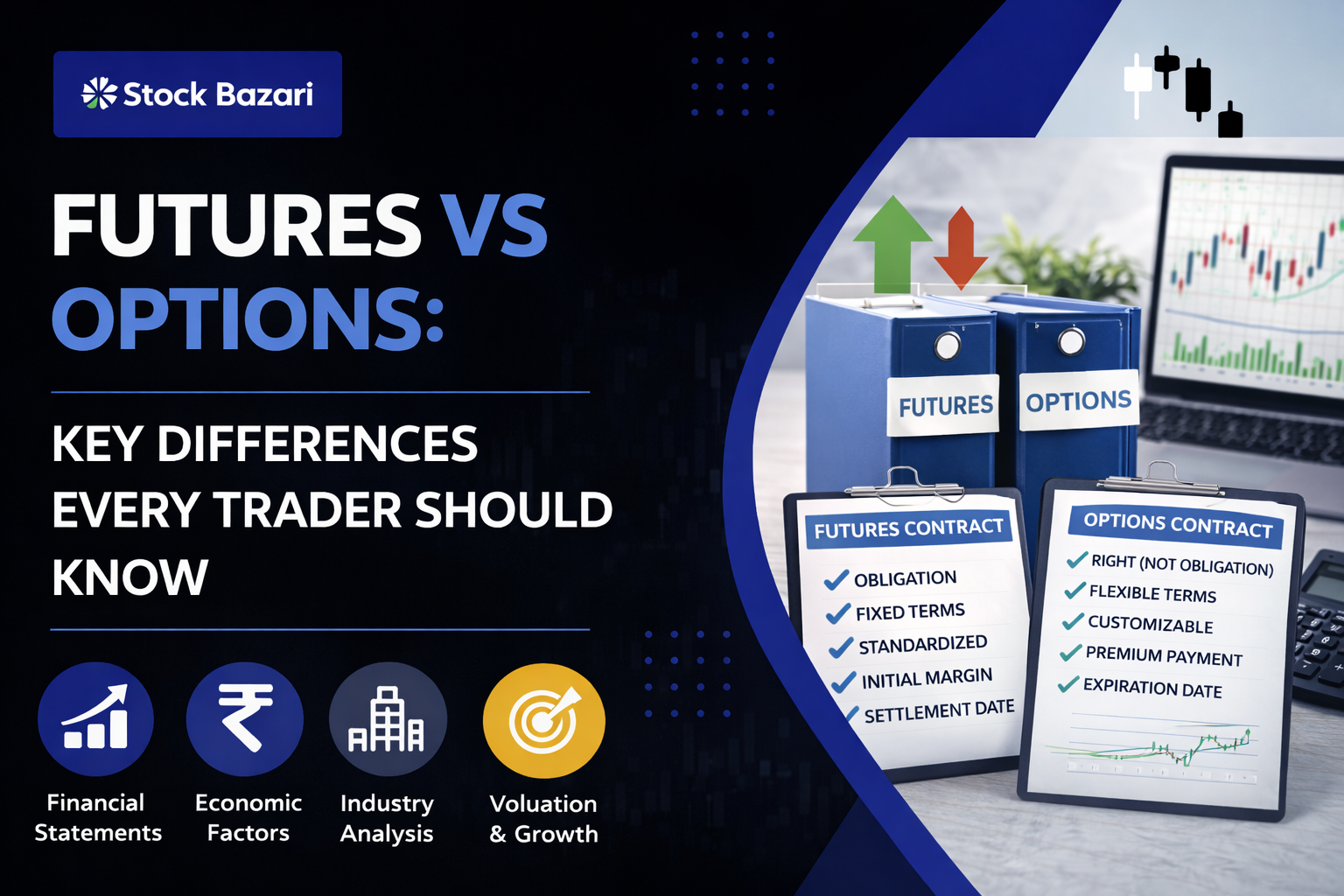
A futures contract is an agreement between two parties to buy or sell an asset at a predetermined price on a future date.
In futures trading, both the buyer and seller have a legal obligation to complete the transaction on the expiry date.
For example:
A trader enters a futures contract to buy a stock at ₹1,000 next month.
If the price rises to ₹1,100, the trader makes a profit.
If the price falls to ₹900, the trader faces a loss.
Because futures contracts involve obligation, the risk can be higher.
What Are Options Contracts?
An options contract gives the trader the right, but not the obligation, to buy or sell an asset at a fixed price before the expiry date.
There are two types of options:
Call Option – Right to buy a stock.
Put Option – Right to sell a stock.
In options trading, the buyer pays a small fee called a premium to purchase the option contract.
If the trade does not move in the expected direction, the buyer can choose not to exercise the contract.
This makes options more flexible compared to futures.
Key Differences Between Futures and Options
Although both are derivatives, there are several differences between futures and options.
Obligation vs Right
In futures trading, both buyer and seller must complete the contract.
In options trading, the buyer has the right but not the obligation to execute the trade.
Risk and Profit Potential
Futures trading can lead to unlimited profit or loss depending on market movement.
Options trading limits the buyer’s loss to the premium paid.
This makes options relatively safer for beginners compared to futures.
Capital Requirement
Futures contracts usually require higher margin money.
Options trading often requires lower capital, especially when buying options.
Because of this, many retail traders in India prefer options trading.
Example of Futures vs Options
Let’s understand this with a simple example.
Suppose the Nifty index is at 20,000.
Futures Example
A trader buys a Nifty futures contract.
If the index rises to 20,300, the trader earns profit.
If it falls to 19,700, the trader faces loss.
The trader must settle the contract.
Options Example
A trader buys a Nifty call option by paying a premium.
If the market rises, the option value increases and the trader profits.
If the market falls, the trader may simply lose the premium paid.
This shows why options offer more flexibility.
Why Traders Use Futures and Options
Traders use F&O trading for several purposes.
Common reasons include:
- Speculating on market direction
- Hedging portfolio risk
- Taking advantage of leverage
- Trading index movements like Nifty or Bank Nifty
Professional traders often combine futures and options strategies to manage risk.
Which Is Better for Beginners?
For beginners, options trading is generally considered easier to start with compared to futures.
This is because:
- Options require lower capital
- Risk can be limited to the premium
- There are flexible trading strategies
However, both futures and options require proper knowledge and risk management.
Learning technical analysis and market behavior is very important before trading derivatives.
Conclusion
Futures and options are powerful trading tools in the derivatives market. While both allow traders to profit from market movements, they work differently.
Futures contracts involve an obligation to buy or sell an asset, while options provide the right but not the obligation to trade.
For beginners in India, understanding the differences between futures vs options is an important step toward becoming a better trader.
With proper learning and discipline, traders can use these instruments effectively in the stock market.